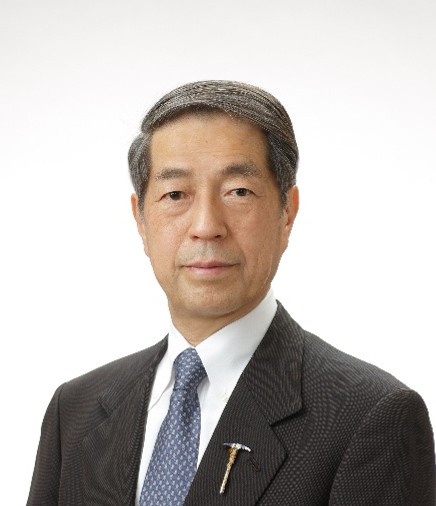
Brief Introduction
I am majoring in hepato-biliary-pancreatic surgery. I have been professor and chairman of surgery at Hyogo Medical University for 20 years and experienced more than 5,000 surgical cases including GI tract cancer and especially HBP cancer as operator. I published approximately 200 English articles including Nature Med., JCI, PNAS, Lancet, Hepatology, Pancreas, Ann Surg, etc, total impact factor is more than 1,200.
Professional Interests & Specialties
- Hepato-biliary-pancreatic surgery & cellular and molecular biology of them.
- Gene therapy for liver cirrhosis and liver cancer.
- Mechanisms and treatment of postoperative adhesion formation.
- Clinical and Basic research of carbon ion therapy.
Specialty
Hepato-biliary-pancreatic surgery. Carbon ion treatment for pancreatic cancer and liver cancer.
Education
- 1979: Shinsyu Univ. School of Medicine, M.D.
- 1991: Hyogo Medical Univ., Ph.D.
- 1992-1994: MGH Cancer Center, Massachusetts General Hospital, Harvard Medical School
Experience
- Liver Surgery: approximately 2,000 operative cases of liver cancer including HCC, ICC, Klatskin, and metastatic liver cancer. 20 cases of liver transplantation.
- Pancreatic surgery: approximately 1,000 operative cases including SSPPD, Whipple and DP, TP.
- Carbon ion therapy: for PDAC in approximately 450 cases, for HCC/ICC in 600 cases.
Selected Publications
- Acute hepatitis in rats expressing human hepatitis B virus transgenes. Proc Natl Acad Sci USA 92: 1470-74, 1995
- Endoscopic ligation of gastric varices. (Research letter) Lancet 348: 1038, 1996
- Hepatocyte growth factor gene therapy of liver cirrhosis in rats. Nature Med 5: 226-230, 1999
- Hepatocyte growth factor ameliorates acute graft-versus-host disease and promotes hematopoietic function. J. Clin. Invest. 107: 1365-1373, 2000
- A novel hepatectomy simulation based on liver circulation: Application to liver resection and transplantation. Hepatology 41:1297-1304,2005
- Adenovirus-mediated expression of BMP-7 suppresses the development of liver fibrosis in rats. Gut 56: 706-714, 2007
- Interferon-g is a therapeutic molecule for prevention of postoperative adhesion formation. Nature Med 14: 437-441, 2008
- Autophagy inhibition with carbon ion radiotherapy migrates immunosuppression-inducing capacity of pancreatic cancer cells. J Hepato-Biliary-Pancreatic Sci. 32: 532-543, 2025
- Carbon ion irradiation activates anti-cancer immunity. Int. J. Mol. Sci. 25:2830, 2024
- Autophagy inhibition increased sensitivity of pancreatic cancer cells to carbon ion radiotherapy. Cell Physiol Biochem 57, 213-226, 2023
Professor of Surgery, Hyogo Medical University
Carbon ion radiotherapy (CIRT) can kill cancer cells by powerful energy transfer by synchrotron-accelerated carbon ion, which is equivalent to that of 70% of light-speed. We have treated approximately more than 450 cases of pancreatic invasive ductal adenocarcinoma (PDAC) within these 7 years. The Japanese national health insurance covers only cStageIII, UR-LA PDAC. Thus, most of the treated cases are locally advanced PDAC which are contra-indication of surgery. Moreover, we treated postoperative local recurrence in approximately 30cases which are involved in the health insurance system. In the present study the clinical data are analyzed.
CIRT was performed with 55.2Gy (RBE) by 12 fractionations. Overall survival (OS), mean survival time (MST), proliferation free survival (PFS), local control ratio (LC), and distant metastasis free survival (DMFS) are analyzed and will be presented. Moreover, results of the multivariate analysis of OS will be presented.